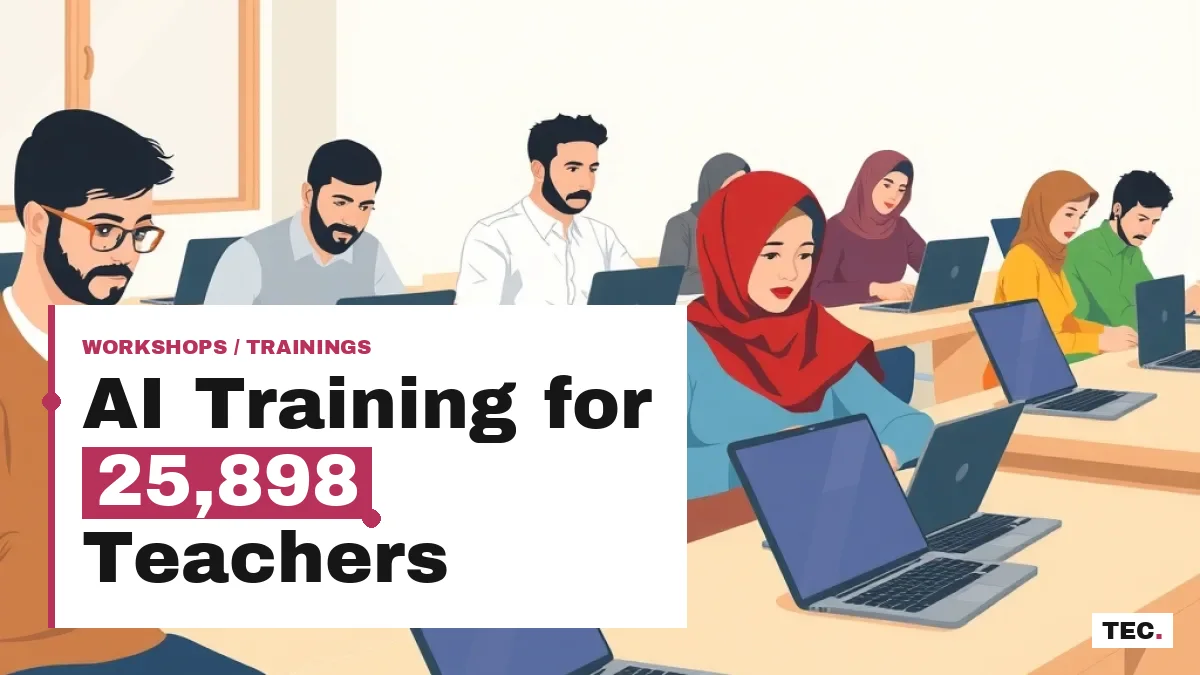
Punjab is rolling out a structured programme to introduce artificial intelligence into classroom instruction, organizing hands-on sessions for 25,898 educators starting November 23. The initiative, led by the School Education Department in partnership with PECTAA, establishes tehsil-level training across the province to equip instructors with practical digital skills. This focused AI training for Punjab teachers targets primary and elementary state schools that have traditionally relied on conventional instruction methods.
Schedule and Phasing Across Punjab's Tehsils
Five separate cohorts will complete the coursework at the tehsil level to manage group sizes and maintain instructional quality. Sessions for the first cohort take place on November 23 and November 24 to establish the schedule baseline. Successive cohorts will rotate through the programme over the following days, ending with the fifth cohort scheduled from December 1 to December 3.
Holding sessions at the tehsil level eliminates long-distance travel to district headquarters or the provincial capital. Local venues will host the sessions so educators can complete the modules close to their duty stations. The timetable keeps normal school operations running without widespread teacher absenteeism while tens of thousands of staff cycle through the coursework.
Selection Criteria and Hardware Requirements for Nominated Teachers
Administrative heads are executing a targeted selection model rather than an open call. District Chief Executive Officers (CEOs) of Education carry direct responsibility for nominations and attendance across their respective jurisdictions. The formal directive requires CEOs to select exactly one representative from every public primary and elementary institution across Punjab.
To participate effectively in the practical modules, every nominated teacher must arrive with appropriate personal hardware. The department has outlined strict gear guidelines for the workshop sessions:
- A functional personal laptop capable of running standard web browsers and tools.
- An active smartphone with sufficient capability to operate modern educational software.
- A government-issued school tablet assigned to their respective facility.
- Confirmation of nomination by the respective district CEO of Education.
- Mandatory attendance across the assigned two-to-three-day workshop schedule.
Curriculum Coverage From Lesson Planning to Ethics
The workshop coursework moves past theoretical software definitions to focus on real classroom workflows. Teachers will learn prompt development and software tool application specifically geared toward generating weekly lesson outlines and structured teaching aids. The sessions also cover digital student assessments. Software will grade assignments, identify learning weaknesses, and analyze student test metrics without administrative delays.
Educational content development forms another major component of the coursework. Instructors will learn to build custom visual aids, worksheets, and contextual reading prompts matched to local syllabi. The curriculum also addresses individual learning variations, allowing teachers to generate differentiated tasks for students who struggle with core concepts or need advanced practice.
The School Education Department has integrated specific guidelines on safe, ethical, and responsible technology usage. Modules address data security, factual verification of computer-generated materials, and techniques to prevent plagiarism or misleading academic content in school settings.
How the Focal Person Cascading Model Works in Practice
Instead of hiring private trainers for every school, the department is implementing an internal multiplier strategy. Each teacher attending the tehsil workshop assumes the formal post of an institutional AI focal person upon finishing the coursework. Their role shifts immediately from student to in-house mentor once they return to their parent primary or elementary school.
These designated focal persons will organize internal peer-training sessions to teach colleagues how to use the same educational software. This step-by-step transfer of knowledge spreads the methodology across thousands of rural and semi-urban classrooms without requiring secondary administrative rounds. It also gives public schools a designated staff member to address technical issues and guide curriculum preparation.
Aligning AI Workshops with Punjab's Digital School Systems
This initiative builds directly on Punjab's efforts to bring systematic digital monitoring into its public schooling framework. The province previously deployed a school monitoring app to digitally audit 60,000 schools, replacing manual paper inspections with verifiable mobile checks. Preparing existing staff to work with classroom software directly mirrors that administrative shift toward digital accountability.
Classroom management policies will balance this software adoption. While the provincial government enforced a strict Punjab school mobile phone ban to curb distractions during student learning hours, designated teacher-led instructional tech remains permitted. Preparing full-time staff with practical digital proficiencies also complements recent human resource expansions, such as the induction of temporary educators through teaching internships in Punjab schools. Structured tech training for permanent faculty creates the technical foundation needed to mentor incoming contractual staff.
Common Questions About the Provincial AI Training Drive
Can private school teachers participate in this training?
No. The current cohort is reserved strictly for nominated staff from government primary and elementary schools across Punjab, coordinated by district education authorities.
Do participants receive department-issued hardware at the training?
Participants must bring their own active device to the tehsil session, whether that is a personal laptop, a smartphone, or a school-allocated tablet.
Who selects the teachers participating in each tehsil?
The Chief Executive Officers (CEOs) of Education in each district nominate one designated teacher per public primary and elementary institution and enforce attendance.
Source: TechJuice