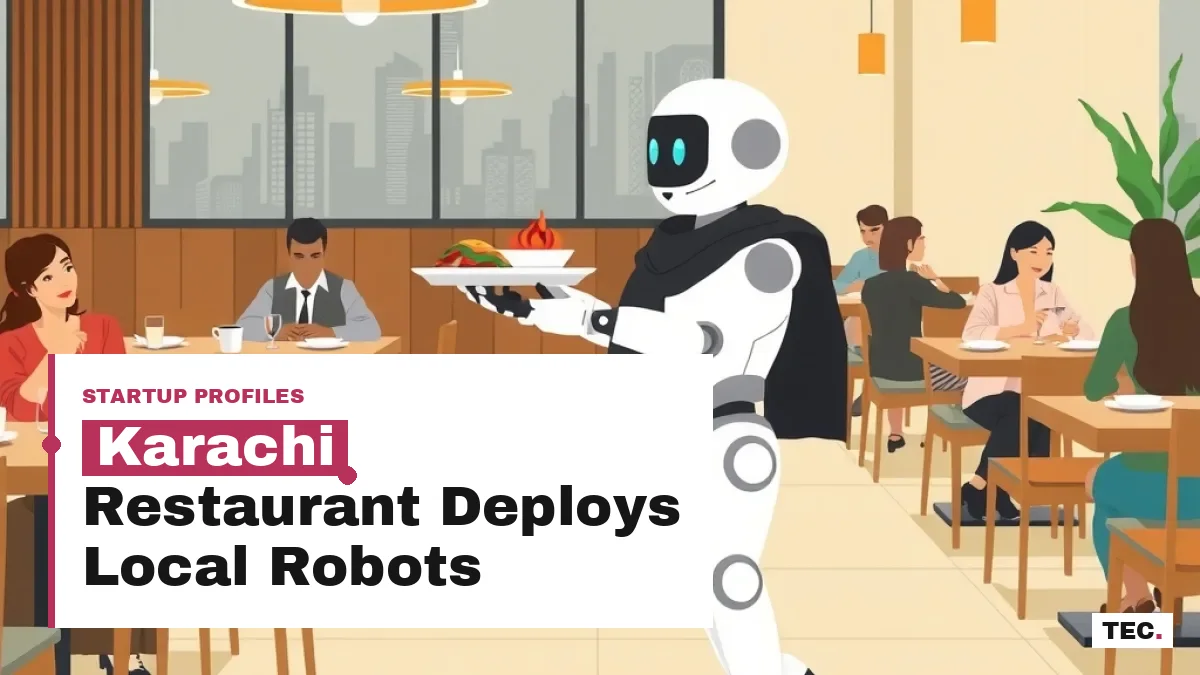
A Karachi restaurant owner has deployed locally built robot waitresses to handle table service, demonstrating how Pakistani engineers can move custom hardware prototypes directly into commercial facilities. Developed by local engineer Syed Osama Aziz through his hardware firm Cobot, the autonomous servers named Robia and Jojo currently operate at The Sicilian eatery in Karachi. For technical professionals and hardware builders, this deployment offers a practical test case for assembling, programming, and maintaining service automation within Pakistan's hardware supply chain.
How Multan Hardware R&D Built Service Hardware for Karachi
Syed Osama Aziz established Cobot to focus on local robotics engineering, setting up a specialized workshop in Multan to handle mechanical assembly and physical fabrication. Inside the Multan facility, Aziz designed custom circuit boards and wrote embedded control software alongside a team of technical colleagues. The team combined structural parts manufactured inside Pakistan with a select number of imported electronic parts to complete each machine.
Sourcing essential hardware components presented persistent challenges throughout the development process. "The equipment, the things needed to make robots, are not so easily available here, so we had to arrange them," Aziz explained to AFP when describing the procurement process for specialized parts. Rather than relying on imported turnkey service hardware, the team chose to construct the units domestically, establishing a local hardware workflow from circuit design to final assembly.
Robia and Jojo Physical Design and Restaurant Workflow
The two robotic units feature spherical white heads fitted with dark visors resembling motorcycle helmets. To adapt the machines to local cultural aesthetics, the physical design includes black shawls styled after traditional dupattas.
The operational flow on the dining floor relies on automated interaction and manual customer retrieval:
- Customer Greeting: Robia welcomes arriving diners using an electronic voice, introduces herself, and recites menu choices.
- Food Transport: The machine carries ordered dishes from the kitchen to table side using an integrated serving tray.
- Order Transfer: Customers take their plates directly off the tray or receive assistance from human floor staff.
- Maintenance & Setup: Core control logic and circuit configurations remain managed via Cobot's Multan lab facilities.
While automated waitstaff are widely deployed across chain restaurants and hospitality venues in China and East Asia, commercial deployments remain rare in Pakistan's food and service sectors.
Commercial Performance and Customer Response in Karachi
The deployment has generated a measurable increase in footfall at The Sicilian, attracting families and diners across long distances within the city. Restaurant staff member Hellen noted that the novelty of the automation has driven new traffic, stating that customers have traveled from far across Karachi specifically because they have seen a robot for the first time at the venue.
Diner feedback highlights varying perspectives on machine-driven service. Customer Ahmer Zameer pointed to the vocal self-introduction as the robot's stand-out feature. Another customer, Sonia Dilosker, noted a preference for machine interaction over human waitstaff, explaining that she appreciated receiving service from machines without emotions. For families, the hardware acts as an interactive attraction, with children approaching the units while parents take photographs and selfies.
Computer Vision Upgrades and the Road to Autonomous Hospitality
To expand the operational capability of Robia and Jojo, Aziz is planning a second phase of technological upgrades centered on computer vision. Future iterations will integrate optical cameras and image-processing software directly into the units' processing units.
These software upgrades aim to introduce personalized customer management features on the dining room floor:
- Recognizing returning customers automatically as they enter the seating area.
- Storing individual dining preferences and previous order histories.
- Generating automated order suggestions based on past visits.
Integrating local hardware development with digital systems reflects a broader trend in urban commercial centers. As hospitality operations explore technological tools, initiatives like Punjab Restaurants Go Digital: 2,500 Join Electronic Invoice Monitoring System! demonstrate how traditional brick-and-mortar businesses are modernizing their daily operations.
Building Hardware Ecosystems in Pakistan
Building functional robotics domestically requires local engineering talent, practical component sourcing, and hands-on technical training. Hardware efforts in Pakistan often face hurdles due to limited availability of specialized sensors, microcontrollers, and precision motors. Early hands-on exposure remains vital for developing skills in circuit design, embedded programming, and mechanical assembly. Initiatives like the Pi Space Science Education Centre Scales Robotics Training Across Pakistan help address this gap by providing structured robotics education to young students and aspiring engineers.
For local tech founders and engineers, the commercial deployment of Robia and Jojo shows that hardware products built in regional workshops can reach active deployment in major retail markets. Sharing these practical hardware experiences at community meetups such as OPEN Islamabad's 23rd Networking Event for Tech Innovators or national showcases like the Indus RAS Expo 2026: Pakistan's National Robotics Expo Comes to Islamabad on July 22–23 helps bridge the gap between engineering R&D and commercial viability.
Key Questions on Local Robotics Commercialization
Where were the Karachi restaurant robots manufactured?
The robots were built by Pakistani engineer Syed Osama Aziz through his company, Cobot. The circuit boards were designed, programmed, and assembled in his workshop laboratory located in Multan, using mostly local parts alongside select imported electronic components.
How do Robia and Jojo interact with restaurant customers?
Robia greets customers with an electronic voice, introduces herself, and explains what items can be ordered. She then moves to tables carrying food on a tray, where customers either take their food directly or wait for human staff to assist.
What future tech upgrades are planned for the service robots?
Syed Osama Aziz plans to add cameras and image-processing software. These capabilities will allow the robots to recognize returning customers, remember past food orders, and suggest menu items based on previous visits.
Source: TechJuice