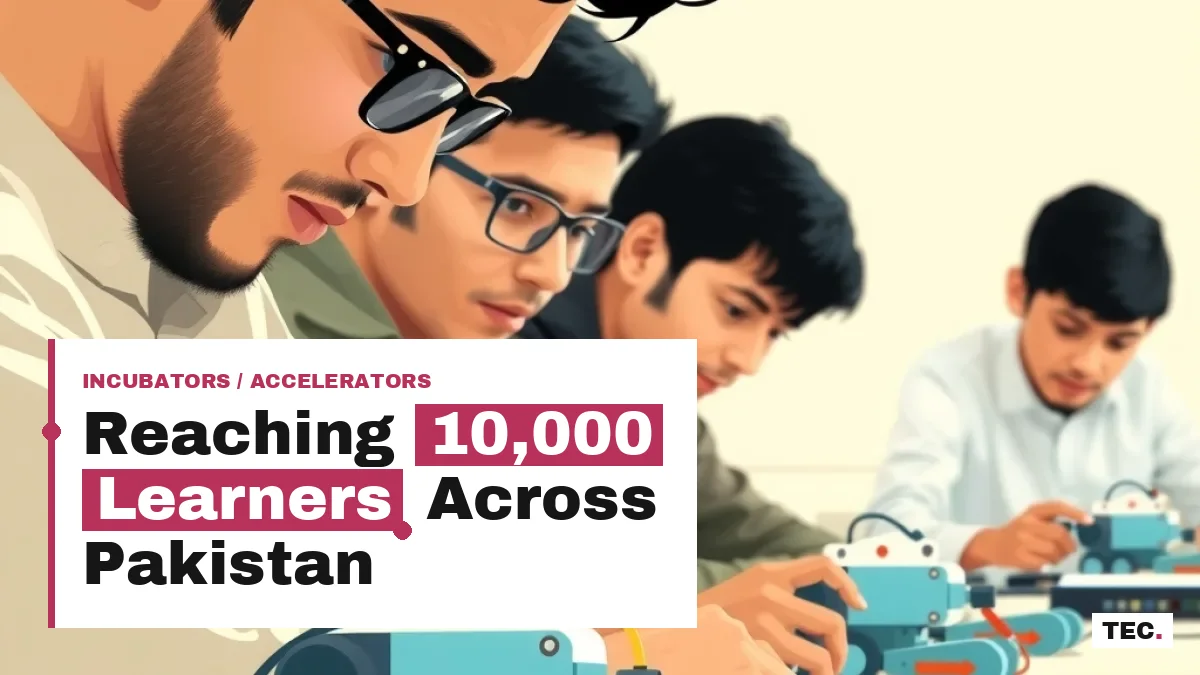
Expanding technical literacy across classrooms in the country requires targeted infrastructure and accessible learning tools. The Pi Space Science Education Centre is scaling its reach through the Pakistan Innovation Quest, a national effort delivering robotics training to young people previously left out due to financial constraints, geography, gender, or disability. This initiative shifts the focus from theoretical learning to direct application, providing the necessary hardware and guidance to build functional systems.
Implemented alongside the World Robot Olympiad Association and backed by Aramco, the program creates a structured track for students. Participants move from basic kit handling to developing original problem-solving projects, competing regionally, and aiming for the World Robot Olympiad Pakistan platform. The initiative addresses systemic gaps by taking hands-on technical education directly into public schools, low-income districts, NGO networks, and female-only institutions. By removing the barrier of entry, the project allows students to engage with engineering concepts that were previously absent from their local curriculum.
Reaching Underserved Communities and Classrooms
Resource limitations have historically restricted technical education to well-funded private institutions in major urban centres. The initiative changes this dynamic by distributing free workshops and resources across different regions. Programs have already moved into schools in Karachi, Lahore, Hyderabad, Gujranwala, and Kasur, bringing physical robotics kits to students who have never handled them before. This geographic expansion is necessary to ensure that technical skills are not concentrated in a single demographic or city.
A key focus remains structural inclusion for students with physical or developmental disabilities. At Deaf Reach School, deaf students took part in the training sessions using sign language interpreters and specialized trainers. This direct engagement ensures that technical learning accommodates diverse student needs from the ground up, positioning participants as builders rather than passive observers. By adapting the teaching method to the student, the program maintains consistent quality across varied learning environments.
Structure of the RoboStarter Sprints
The operational framework of the program relies on targeted sprints and educator development to maintain long-term institutional capacity. These sprints provide a compressed timeline for students to master specific mechanical and programming tasks before moving to more complex designs. Key metrics and design elements of the rollout include:
- Targeting a total of 10,000 student learners and 300 teachers across the national lifecycle.
- Executing over 60 RoboStarter Sprints combined with the World Robot Olympiad Future Innovators project cycle.
- Hosting six regional competitions leading into a centralized National Showcase.
- Aiming for a minimum of 40 percent female participation across all participating institutions.
- Donating 100 robotics kits directly to underserved schools to ensure continued learning after the funded program concludes.
Current Trajectory and Institutional Network
Implementation is underway across multiple fronts. To date, the program has engaged more than 6,000 learners and 518 teachers across 60 institutional partners. Zartaj Ahmed, CEO and co-founder of the Pi Space Science Education Centre, states that closing the access divide is essential for building local capability. This network of partners provides the physical space and the student base required for the program to function at scale.
Educators receive professional development alongside student sessions. This dual approach ensures that schools retain the internal capacity to teach robotics long after the initial sprints conclude. Following these regional sessions, participants prepare for upcoming competitive platforms, mirroring technical initiatives seen in Indus RAS Expo 2026: Pakistan's National Robotics Expo Comes to Islamabad on July 22–23 where broader technology displays engage local engineering talent. Teachers who complete the training gain the ability to troubleshoot hardware and guide students through the design process independently.
Next Steps for Regional Winners
Students who complete the project cycle present their applications at the National Showcase. This event connects young builders with school administrators, government officials, and industry stakeholders. Strong projects secure direct pathways into official World Robot Olympiad competitions, bridging the gap between foundational classroom training and national competitive engineering ecosystems. The final stage requires students to defend their design choices and demonstrate the functionality of their robots to a panel of judges.
Source: PhoneWorld