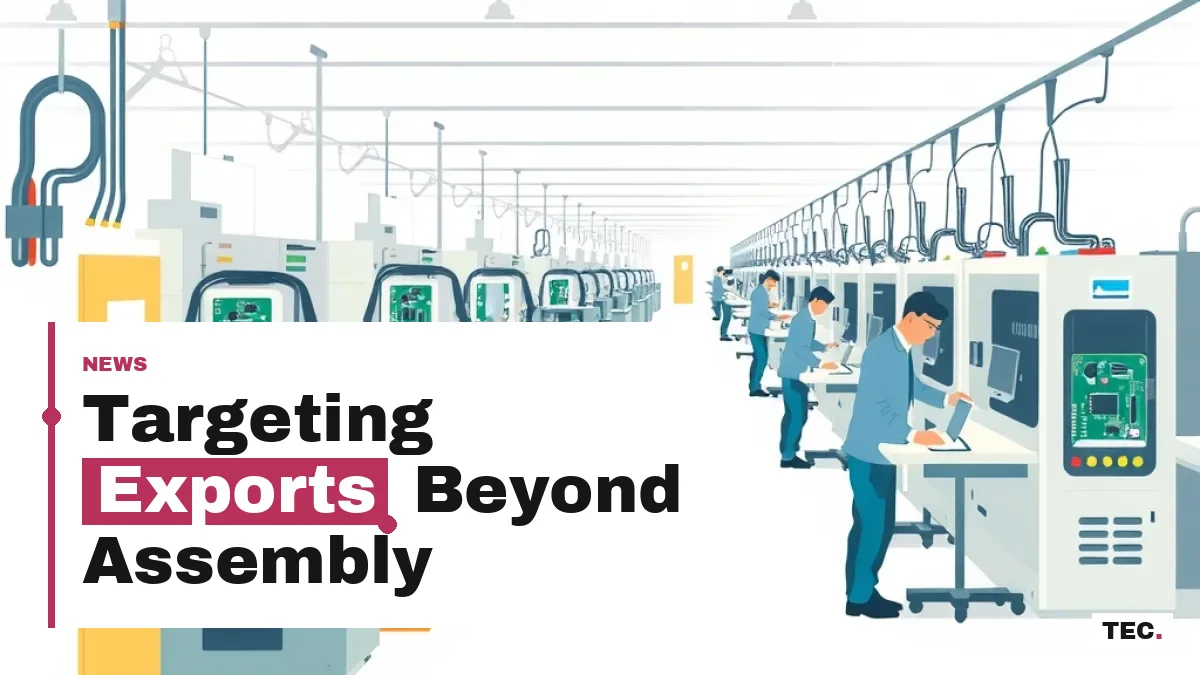
The government is shifting its strategy from simple device assembly to full domestic component production. Under the newly announced Mobile and Electronics Devices Manufacturing Policy for 2026-2033, federal officials want to expand local mobile and electronics manufacturing into direct technology transfer and hardware exports. For Pakistani hardware engineers, tech professionals, and industrial founders, the eight-year roadmap attempts to alter how mobile devices and electronics are produced across the country.
What the 2026-2033 Mobile and Electronics Framework Targets
The Ministry of Industries and Production has started work on an eight-year policy designed to move the domestic sector away from basic assembly operations. Haroon Akhtar Khan, Adviser to the Prime Minister on Industries and Production, announced that the upcoming framework covers the period from 2026 to 2033. The primary goal is to build an industrial base capable of manufacturing finished electronic products and individual sub-components inside Pakistan.
Previous industrial attempts focused largely on assembling knocked-down kits imported from overseas plants. While that approach created assembly line jobs, it left domestic industry dependent on foreign component suppliers and vulnerable to currency fluctuations. Under the upcoming 2026-2033 guidelines, federal authorities plan to incentivize technology transfer so domestic plants can produce electronic parts locally. Interested readers can review how earlier framework targets aimed for Pakistan Targets 50 Percent Localisation in New Mobile Policy to understand how policy expectations have developed over recent years.
To draft the framework, the government directed the Engineering Development Board (EDB) to consult directly with local and international stakeholders. EDB will gather input from electronics manufacturers, industry experts, and supply chain operators before finalizing the provisions.
Transsion Holdings Seeks Investment Expansion in Local Hardware
Chinese consumer electronics manufacturer Shenzhen Transsion Holdings met with government officials in Islamabad to discuss local manufacturing and investment expansion. The Transsion delegation confirmed its interest in scaling up local operations and exploring deeper component localization within Pakistan.
Haroon Akhtar Khan formally invited Chinese electronics firms to increase their capital investment and establish localized supply networks. Closer cooperation between Pakistani plants and Chinese technology partners aims to build local industrial capacity and expand foreign export potential. Foreign firms looking into component production reflect a broader trend where international manufacturers test local manufacturing, as seen when Transsion Explores Smartphone Component Manufacturing in Pakistan Beyond Local Assembly.
Establishing raw component production requires steady technical support and capital commitments. Transsion's willingness to evaluate local component manufacturing aligns with the government's aim to transform Pakistan into a regional hardware export hub rather than a destination for finished imports.
Key Directives for the Engineering Development Board
The government assigned specific tasks to the Engineering Development Board to ensure the 2026-2033 policy reflects realistic industrial requirements.
- Consult directly with existing assemblers, component suppliers, and technology partners during policy drafting.
- Draft concrete mechanisms to encourage foreign manufacturers to transfer hardware technology to local workers and factories.
- Identify specific mobile phone components and electronic parts suitable for immediate local production.
- Establish policy incentives that support exporting finished electronics to regional markets.
- Build industrial framework structures that reduce reliance on imported electronic kits.
Economic Impact of Local Component Manufacturing
Transitioning from assembly to true manufacturing alters the cost structure of Pakistan's technology sector. Importing completely knocked-down or semi-knocked-down kits places continuous pressure on foreign currency reserves. When domestic plants manufacture circuit boards, displays, batteries, and outer casings inside the country, a larger portion of the value chain remains within the local economy.
This structural shift directly affects trade numbers. Recent fiscal data shows how import demand fluctuates, such as when Pakistan Mobile Phone Imports Fall 16.6% to $417M in Q1 FY27. If the 2026-2033 policy successfully shifts production to local components, domestic manufacturers can reduce their import expenditures while opening up new revenue streams from exports.
For Pakistani tech professionals and engineering graduates, a functioning electronics manufacturing sector expands career options beyond software development and IT services. Hardware engineering, surface-mount technology plant management, and quality control systems require specialized technical talent that local universities can train if industrial demand exists.
Regulatory Responsibilities and Tax Clarifications
As discussion around mobile manufacturing policies expands, industry players often raise questions regarding device taxation and regulatory oversight. Official sources clarify that tax rates and collection calculations for mobile phones remain under the jurisdiction of the Federal Board of Revenue (FBR). The Pakistan Telecommunication Authority (PTA) manages device registration and compliance standards rather than determining tax rates. Clear distinction between tax policy by the FBR and industrial manufacturing policy by the EDB provides clarity for foreign investors planning multi-year capital outlays.
Addressing Key Questions Around Pakistan Electronics Policy
When will the new mobile and electronics manufacturing policy take effect?
The government is currently preparing the Mobile and Electronics Devices Manufacturing Policy to cover the period from 2026 to 2033.
Who is leading the policy drafting process?
The government directed the Engineering Development Board (EDB) to consult with industry stakeholders and draft the policy framework under the guidance of the Ministry of Industries and Production.
Which entity handles mobile phone taxation in Pakistan?
Mobile phone tax rates and calculations fall under the jurisdiction of the Federal Board of Revenue (FBR), whereas regulatory compliance and technical registration fall under the Pakistan Telecommunication Authority (PTA).
Source: PhoneWorld