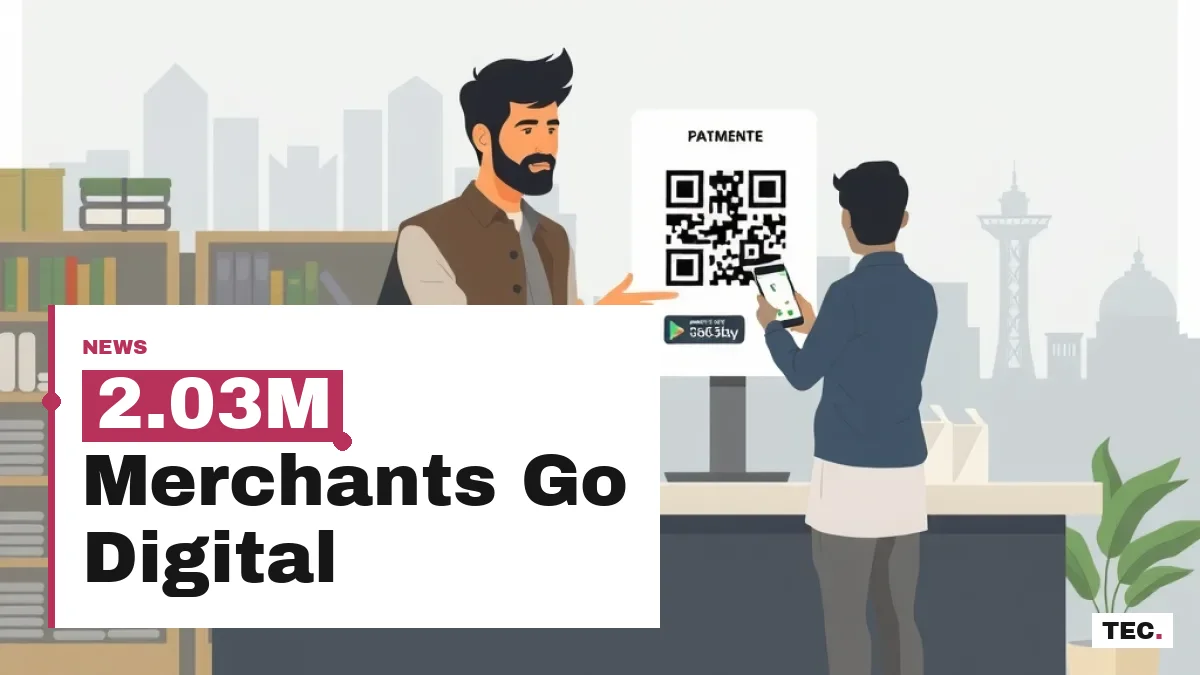
Pakistan’s retail sector is rapidly shifting away from cash as the number of active digital merchants reaches 2.03 million across the country. To keep this momentum going without squeezing small shopkeepers, the federal government has instructed the central bank to establish a standardized Raast QR payment scheme fee structure. For local fintech startups and merchants, this regulatory step creates a clear, sustainable business model for digital transactions.
Fourfold Merchant Growth Drives Cashless Pakistan Targets
In a single year, the count of active merchants accepting digital payments in Pakistan jumped from 500,000 to 2.03 million. That fourfold surge coincides with a doubling of overall digital transaction volumes across nationwide payment networks.
This growth is driven by targeted efforts under the Prime Minister's Cashless Pakistan initiative. Minister of State for Finance Bilal Azhar Kayani chaired a high-level review meeting at the Finance Division to evaluate these operational milestones. Rather than relying solely on voluntary adoption, government departments and private financial institutions collaborated to bring formal storefronts into the digital fold.
The expansion includes participation from key financial ecosystem players. Representatives from the State Bank of Pakistan (SBP), Ministry of IT and Telecommunication, NADRA, Easypaisa, JazzCash, Bank Alfalah, JS Bank, and Karandaaz Pakistan attended the session to align their operational targets.
Structuring the Raast QR Merchant Discount Rate Scheme
As merchant onboarding accelerates, transaction economics have become the central focus for regulators. The federal government has formally directed the SBP to prepare a detailed working paper to approve a structured Raast QR Merchant Discount Rate (MDR) framework.
The Merchant Discount Rate represents the fee percentage collected from retailers when processing digital payments. Currently, varying rates across mobile wallets, acquiring banks, and payment gateways create confusion for small merchants. A formal MDR framework under Raast aims to establish transparent, predictable costs for business owners accepting instant QR payments.
For digital payment providers, a clear MDR policy defines how income is split between acquiring entities, issuing banks, and switch operators. By setting these parameters through an official SBP working paper, the government intends to protect merchant margins while ensuring financial institutions can cover their infrastructure costs.
Integrating Utility Bills, Government Accounts, and NADRA Outlets
Beyond retail shops, public sector services are embedding instant payment options into daily transactions. Raast QR codes are now printed on more than 45 million gas and electricity bills across Pakistan, allowing citizens to pay monthly utilities directly through banking and wallet applications.
Government services have also completed mandatory integrations. All National Database and Registration Authority (NADRA) centers nationwide now feature active Raast QR payment facilities at counter checkouts. Furthermore, official directives dictate that all government payments for Asaan Assignment Accounts moving to Raast will be processed through the system from November 16.
These integrations convert routine civic interactions into digital payment channels. By adding QR codes to utility bills and public service counters, the government is creating high-frequency payment habits that feed back into commercial retail adoption.
Central Dashboards and Upcoming Meetings With Commercial Bank CEOs
To maintain oversight over transaction performance, government officials emphasized tracking digital payment metrics through centralized dashboards. This system measures transaction values, overall volumes, and the precise count of unique account holders across the country.
Real-time monitoring allows the Finance Division and SBP to identify regional adoption gaps and transaction failures immediately. Rather than relying on delayed quarterly reports, decision-makers use central dashboard data to adjust operational targets for commercial banks.
To push adoption further into commercial banking channels, Minister Kayani announced plans to meet directly with bank presidents and chief executive officers in Karachi. The upcoming discussions will focus on expanding digital merchant services, improving mobile app reliability, and resolving technical bottlenecks in payment processing.
Key Milestones of Pakistan's Cashless Digital Ecosystem
- Active digital merchants increased from 500,000 to 2.03 million within 12 months.
- Overall digital payment volume across the nation doubled in the same period.
- Raast QR codes printed on more than 45 million electricity and gas bills.
- Complete rollout of Raast QR payment facilities across all NADRA centers.
- Mandatory transition of Asaan Assignment Account payments to Raast effective November 16.
- Directives issued to SBP to formulate an approved Raast QR MDR working paper.
What the Raast Framework Means for Local Fintech Founders
From a technology sector perspective, standardising merchant fee structures is a necessary step to build trust among small business owners. When micro-merchants know exactly what percentage they pay per transaction, resistance to non-cash sales drops significantly.
However, setting the MDR too low risks squeezing margin expectations for private payment gateways and digital wallets that invest heavily in merchant acquisition and field agent networks. SBP's upcoming working paper must balance affordability for shopkeepers with financial incentives for tech platforms. If the SBP gets the fee split right, local fintech founders will gain a reliable foundation to build value-added services like point-of-sale inventory management and automated merchant credit scoring.
Questions Readers Ask About the Raast Payment Expansion
When will the new Raast QR MDR scheme take effect?
The SBP is currently drafting the official working paper. Implementation dates will be finalized once the central bank submits the framework for formal government approval.
How many merchants in Pakistan currently accept digital payments?
Active digital payment merchants stand at 2.03 million, up from 500,000 recorded a year earlier under the Cashless Pakistan initiative.
Can utility bills be paid directly using Raast QR codes?
Yes, over 45 million electricity and gas bills across Pakistan feature Raast QR codes that can be scanned through supporting banking and wallet apps.
Source: TechJuice