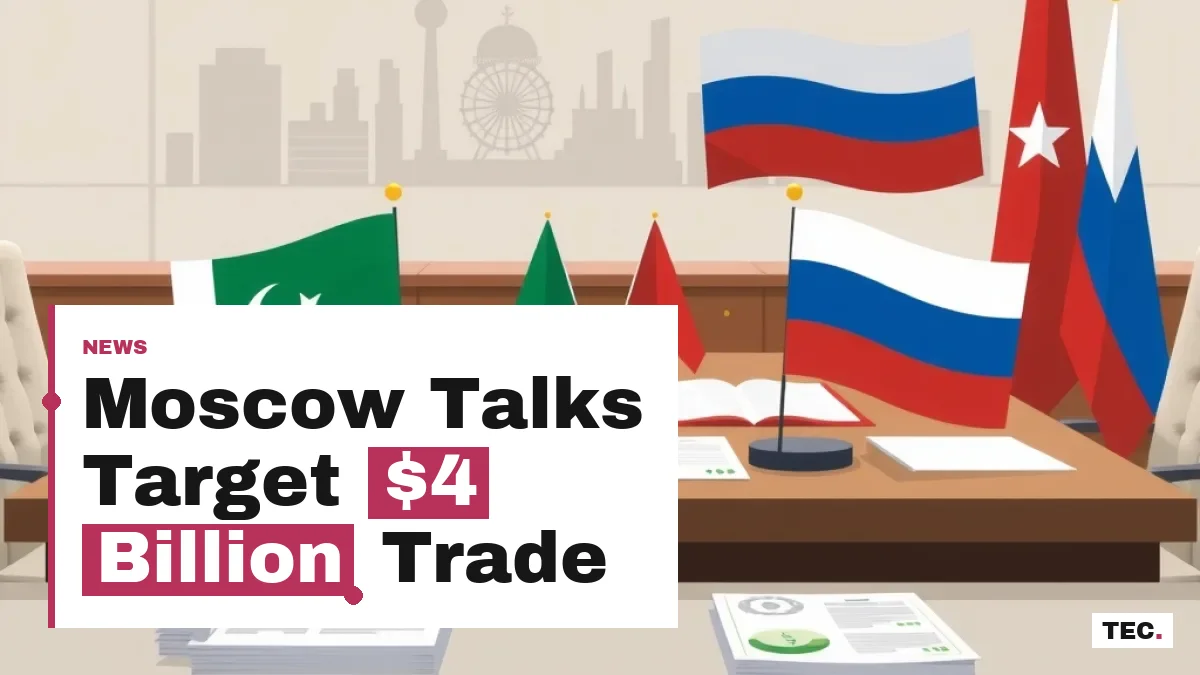
Pakistani commercial entities trading internationally face heavy financial overheads due to indirect clearance routes through third nations. Multi-tier banking fees and extended settlement windows currently restrict commercial exchanges between Pakistani businesses and international counterparties. The upcoming high-level talks for a Pakistan Russia payment mechanism in Moscow on November 23–24 aim to address these exact financial barriers through direct institutional arrangements.
Moscow Talks Set for November 23-24 Under Prime Ministerial Push
Officials from Islamabad and Moscow will meet on November 23–24 to negotiate the framework for a direct financial settlement channel. Prime Minister Shehbaz Sharif instructed relevant ministries to accelerate technical preparations ahead of his planned official visit to Russia later this month.
Direct financial channels between the two countries aim to reduce reliance on third-country clearing systems. These negotiations build upon previous bilateral technical engagements, such as when Pakistan and Russia shortlisted AI and cybersecurity projects to scale exports across regional markets. Establishing clear payment procedures is necessary to support extended trade agreements between both nations.
The High Cost of Third-Country Banking Channels
Currently, commercial transactions between Pakistan and Russia rely primarily on payment processing through financial institutions based in third countries. This indirect payment routing creates several distinct operational problems for commercial traders in both markets:
- Elevated Processing Costs: Intermediary institutions charge distinct handling fees at each stage of the clearing process, raising total transaction overhead.
- Settlement Delays: Routing transactions through multiple overseas banks extends processing timelines, restricting working capital availability for exporters.
- Administrative Constraints: Third-country routing introduces extra regulatory compliance steps across multiple foreign jurisdictions.
- Foreign Exchange Losses: Multiple currency conversions between initial processing banks lead to additional margin costs for buyers and sellers.
Eliminating intermediate clearing banks directly addresses these cost structures. If negotiators establish a functional direct framework, Pakistani exporters and importers can retain higher margins while reducing delays associated with international financial routing.
Key Delegations and Central Bank Involvement in Settlement Talks
The composition of both negotiating teams reflects the technical emphasis of the Moscow meetings. Russia’s delegation will be led by the governor of Russia's central bank. On the Pakistani side, the Foreign Office has coordinated a delegation containing representatives from the State Bank of Pakistan, alongside ministry officials responsible for industry and power.
Direct central bank leadership allows both sides to address fundamental clearance regulations and interbank messaging systems. This bilateral institutional planning complements wider technical workforce programs, including joint efforts where Pakistan targets one million AI professionals by 2030 in tech push with Russia. Including Pakistani power and industry representatives indicates that energy imports and industrial goods remain major drivers behind the search for payment solutions.
$4 Billion Trade Target Hinges on Mutually Acceptable Currencies
Proposals on the table in Moscow center on settling commercial transactions in currencies mutually acceptable to both nations. Negotiators are looking to identify specific banking channels capable of handling direct account settlements without reliance on standard reserve currency clearinghouses.
According to Pakistan's ambassador, removing cross-border payment barriers could expand bilateral trade volume to an estimated $3 billion to $4 billion [approx. PKR 835 billion to PKR 1.11 trillion]. For Pakistani financial managers, establishing direct payment rails presents a structural shift similar to domestic modernization efforts, such as when CDC and EClear Services expanded Raast digital payments across Pakistan's capital market. Achieving the ambassador's $4 billion trade projection requires functional banking channels capable of supporting high-volume commercial settlements without delays.
Implementation Risks and Banking Channel Hurdles Ahead
Despite clear economic targets, functional deployment of a bilateral payment mechanism faces operational and regulatory checks. The success of any agreement reached in Moscow depends entirely on how quickly commercial banks integrate the proposed settlement procedures.
Pakistani commercial banks must evaluate global compliance requirements before opening direct financial channels with Russian banks. If private banks remain cautious due to risk management concerns, initial settlement adoption might be limited to state-owned institutions. Additionally, handling settlements in alternative or mutually agreed currencies requires clear exchange rate management to protect traders from currency fluctuations. The technical details finalized during the November 23–24 meetings will determine whether the mechanism becomes a practical tool for everyday commercial trade.
Clear Answers for Pakistani Businesses on the Moscow Negotiations
What specific payment proposals are under review in Moscow?
Negotiators are evaluating direct settlement mechanisms using mutually acceptable currencies and identifying specific banking institutions to process transactions without third-country intermediaries.
Who is participating in the bilateral payment negotiations?
Russia’s delegation is led by its central bank governor. Pakistan’s team includes officials from the Foreign Office, the State Bank of Pakistan, and representatives from the industry and power sectors.
How will a direct payment channel affect transaction costs for traders?
Bypassing third-country clearing banks reduces intermediate handling fees, lowers foreign exchange conversion margins, and cuts processing delays for commercial transactions between both countries.
When will the bilateral payment mechanism take effect?
Implementation timelines depend on the outcomes of the Moscow meetings on November 23–24 and the execution of regulatory procedures by both central banks and participating commercial institutions.
Source: Digital Pakistan