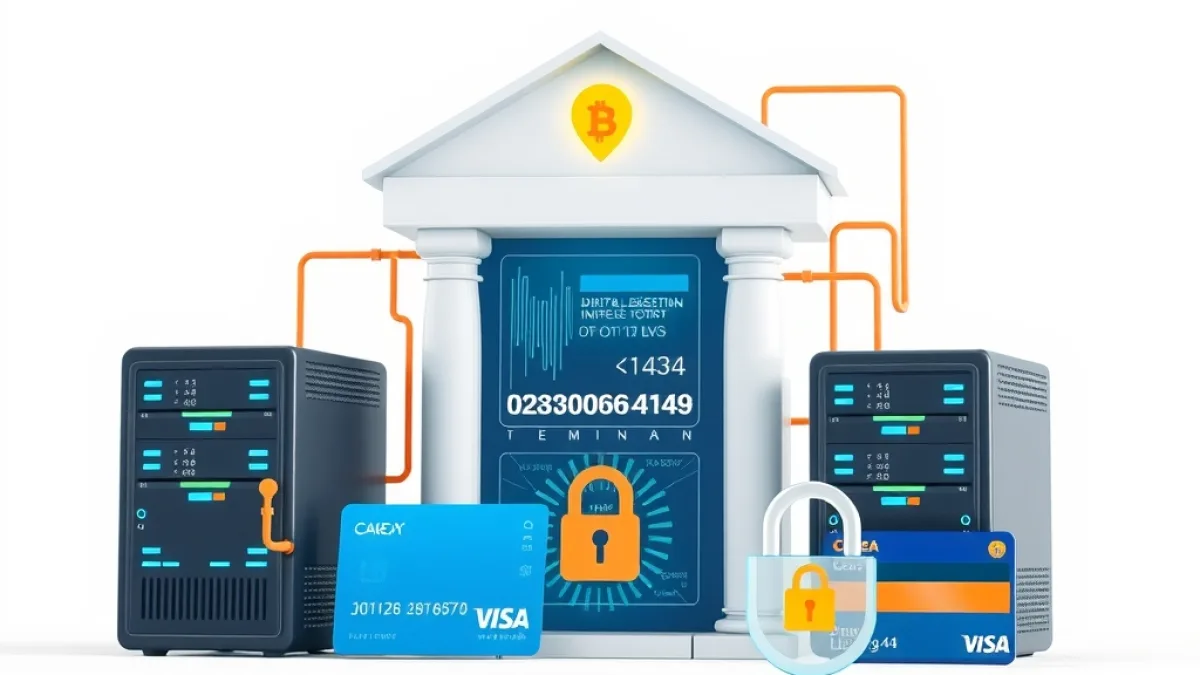
When a major financial institution shifts millions of active accounts overnight, the entire fintech landscape takes notice. Meezan Bank (PSX: MEBL) has officially upgraded its underlying tech stack by migrating its entire payments business to BPC’s SmartVista platform. This monumental digital transformation immediately transitions 7.5 million active cards, alongside all merchant services and payment processing operations, onto a unified infrastructure.
For founders, students, and tech professionals tracking Pakistan's evolving financial ecosystem, this transition represents a massive leap in processing capability. As digital adoption accelerates nationwide—mirrored by shifts like Digital Payments Dominate Retail Transactions in Pakistan – 88% Now Cashless!—bank infrastructure must scale rapidly to prevent bottlenecks and system downtimes.
The Scale and Processing Power of SmartVista
The operational numbers behind this migration reveal the sheer volume of transactions handled by Meezan Bank daily. Managing a retail banking network of this scale requires enterprise-grade architecture capable of handling extreme concurrency during peak retail hours.
- 1,500+ Transactions Per Second: Peak processing capability of the new SmartVista platform.
- 2 Million Daily Raast Transactions: Instant payment volume processed actively by the bank.
- 100,000+ QR Codes: Active merchant QR network supported across Pakistan.
- 7.5 Million Active Cards: Entire card portfolio successfully shifted to the new system in one massive operational move.
This massive infrastructure consolidation means point-of-sale (POS) transactions, e-commerce gateways, instant transfers, and QR payments now run through a single, centralized core. Furthermore, integrated fraud management protocols allow the bank to monitor risks in real time across all channels.
Leadership Perspectives on Long-Term Digital Growth
Executing a migration of this magnitude without disrupting everyday consumer banking requires meticulous coordination between internal tech teams and external vendors. Faiz ur Rehman, Group Head of Information Technology at Meezan Bank, confirmed that seamless operational continuity was maintained throughout the transition. He noted that the upgraded framework will heavily support the continued scaling of their card business, merchant services, digital payments, and Raast integration.
Adding to this, Ali Imran Khan, Chief Information Officer at Meezan Bank, emphasized that strengthening the foundational digital payments architecture is vital for future resilience. The new platform ensures smooth payment processing across every single banking channel, positioning the institution to handle upcoming spikes in digital commerce.
From the vendor side, Furrukh Ali-Baig, BPC’s Managing Director for Pakistan, Nepal, and Iraq, pointed out that the SmartVista environment delivers the exact processing capacity, advanced fraud protection, and instant payment tools needed to sustain Meezan Bank's rapid expansion.
What This Means for Pakistan's Fintech and Banking Ecosystem
From my perspective as a tech analyst fueled by chai and deep-tech obsessions, this migration signals a broader shift in Pakistan's banking sector. Legacy core banking systems are no longer enough to support the country's appetite for instant, frictionless digital payments. As platforms like Raast continue to scale—and with developments such as SBP Extends RAAST Payment System to Provincial Accountant Generals! transforming public sector disbursements—commercial banks must modernize their back-ends to remain competitive.
When the largest Islamic bank in the country centralizes its entire transaction processing onto a modern platform like SmartVista, it sets a benchmark for the rest of the market. Software houses, fintech developers, and digital merchants should expect higher reliability, faster API responses, and stricter fraud compliance protocols when integrating with tier-one banking channels moving forward.
Questions Founders Are Asking About Enterprise Tech Upgrades
How do large banks migrate millions of cards without downtime?
Such migrations require rigorous phase-based testing, parallel system runs, and close coordination between internal IT groups and specialized platform providers like BPC to ensure continuous operational uptime.
Why is unified payment infrastructure critical for merchants?
A unified platform consolidates POS, e-commerce gateways, QR codes, and instant payments into one dashboard, reducing transaction friction and improving real-time reconciliation for vendors nationwide.
What role do platforms like SmartVista play in fraud prevention?
Modern payment platforms embed advanced real-time monitoring and automated fraud management protocols directly into the transaction processing pipeline, safeguarding millions of daily users.
Source: TechJuice