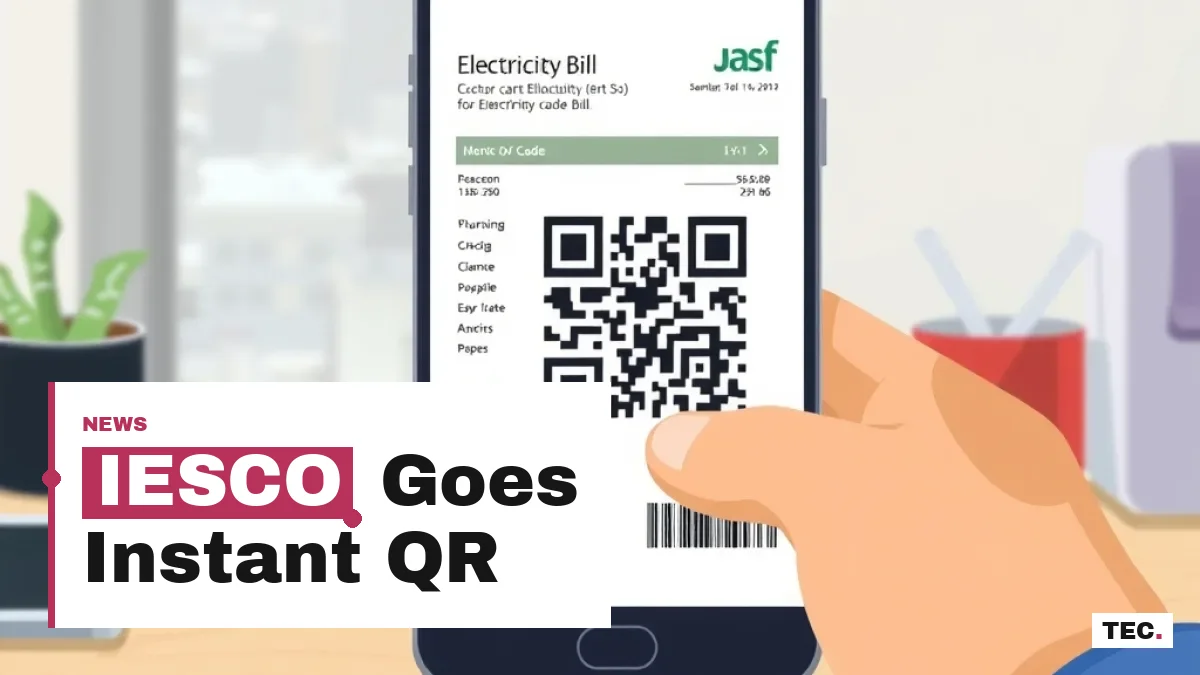
Islamabad Electric Supply Company has rolled out a direct scan-to-pay option across its service region, removing the need for manual reference entry during bill settlement. Consumers in the federal capital and surrounding areas can now process IESCO QR code payments directly through their smartphones by scanning codes printed on official documents.
The service addresses routine friction in utility collections by enabling mobile banking applications and digital wallets to capture billing data automatically. Chief Executive Officer IESCO Engr. Khalid Mahmood stated that the facility aims to accelerate payment processing while improving transparency and collection accuracy across the distribution network. The change targets a common source of payment errors, where users manually type 14-digit consumer numbers into mobile applications and accidentally misdirect payments to incorrect accounts.
How IESCO Direct QR Scanning Works for Bills and Demand Notices
The system embeds quick response codes directly onto physical and digital billing documents issued by the utility provider. Instead of typing reference numbers into bank applications, consumers open their mobile banking app or digital wallet to scan the document code directly. The embedded code carries encoded parameters including the consumer reference number, issue date, due date, and exact payment amount due before and after the deadline.
According to statements from TechJuice reporting, the scanning feature applies to regular monthly electricity bills as well as all categories of demand notices issued by IESCO. CEO Engr. Khalid Mahmood noted that direct code scanning minimizes human error during transaction entry and keeps billing records accurate for the distributor. Demand notices, which cover new connection fees, meter replacement charges, and tariff adjustments, previously required direct visits to designated bank branches for physical stamp verification. Incorporating these notices into the digital scanning system enables applicants to handle capital payments electronically without queuing at physical outlets.
Step-by-Step Payment Process via Banking Apps and Wallets
The facility operates 24 hours a day, 7 days a week, allowing consumers to clear utility dues without visiting physical bank counters or payment collection outlets.
- Open any supported mobile banking application or digital wallet on a smartphone.
- Access the built-in QR scanner within the payment section.
- Scan the QR code printed on the original IESCO bill or demand notice.
- Verify the displayed payable amount on screen against the paper document.
- Confirm the transaction to complete the payment instantly.
Once confirmed, the bank application processes the transfer through national payment rails and generates an instant digital receipt. The utility company receives transaction notifications in real time, updating consumer account ledgers without manual batch processing. This digital routing aligns with broader civic digitization drives in the region, including the CDA cashless payment system for civic services operating across federal departments.
Security Warnings and Safeguards for Utility Consumers
To guard against fraudulent payment attempts, IESCO issued specific operational guidance alongside the deployment. Engr. Khalid Mahmood advised consumers to scan codes exclusively from original IESCO bills and demand notices. Scammers sometimes attempt to paste fake payment stickers over legitimate bill details, directing funds toward private accounts.
Consumers must carefully check the transaction details displayed on their mobile banking screens before finalizing any transfer. Verifying that the merchant recipient and payment amount match official document figures remains a critical precaution against fake billing media. Official transactions resolve directly to IESCO collection accounts within certified banking networks, ensuring immediate account clearance and receipt verification.
Impact on Utility Collections and National Fintech Goals
Utility payments represent a massive source of transaction volume for Pakistani commercial banks and wallet operators. Adding instant QR capability to utility billing speeds up Pakistan’s digital payments adoption through QR codes by converting routine cash payments into tracked electronic transfers. Millions of household electricity bills clear each month across the country, making utility billing one of the largest entry points for digital financial service onboarding.
For consumers, round-the-clock availability reduces reliance on physical payment centers. For IESCO, real-time digital settlement lowers operational reconciliation overhead and improves daily collection tracking across Islamabad, Rawalpindi, Attock, Chakwal, and Jhelum districts. Automating data capture reduces administrative delays associated with matching paper deposit slips to account numbers, allowing staff to clear ledger backlogs faster.
This rollout aligns with broader targets outlined in Pakistan's national payment digitisation goals, which depend on public sector utility providers offering direct electronic payment channels. Standardizing utility payments on universal QR protocols helps build consistent consumer habits around mobile banking tools.
Key Operational Questions Around IESCO QR Implementation
Direct electronic payments alter how consumers interact with utility billing across Islamabad and adjacent districts.
Can consumers pay all types of IESCO demand notices using QR codes?
Yes, IESCO confirmed that the QR payment facility covers monthly electricity bills along with every category of demand notice issued by the company.
What mobile applications support the IESCO QR feature?
Consumers can use any commercial bank mobile app or digital wallet that includes a standard QR code scanning tool.
Is the IESCO QR payment system operational around the clock?
The QR payment system remains active 24 hours a day, 7 days a week for immediate processing.
Source: TechJuice