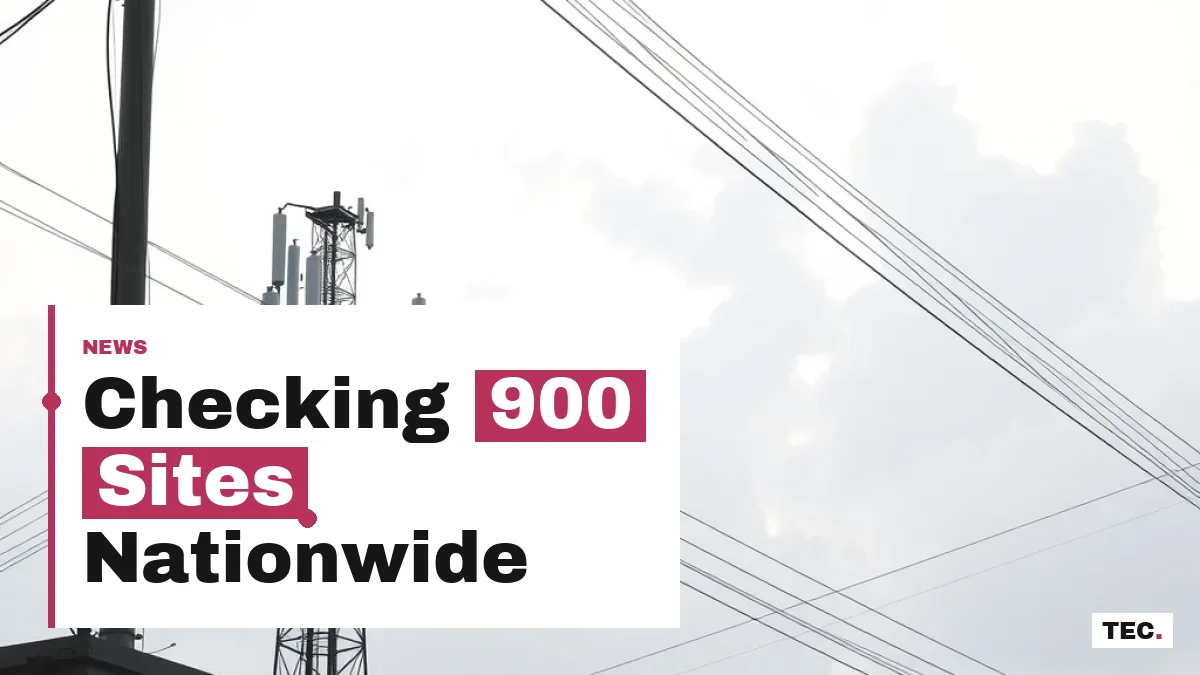
Mobile network performance in Pakistan continues to face severe operational bottlenecks, particularly in remote regions and high-density urban areas. For remote workers, software developers, and businesses relying on uninterrupted broadband, unexpected signal drops disrupt routine work. The Pakistan Telecommunication Authority has expanded its field operations across the country, passing nine hundred total site inspections to document power and hardware faults.
Between October 22 and October 28, technical field squads checked 184 individual mobile network installations. This surge pushed the cumulative number of inspected towers past 900. Field officers worked directly alongside mobile network operators, local district administrations, and community representatives to identify why towers fail during peak usage hours.
Where Field Teams Monitored Infrastructure
Field squads covered a diverse geographical spread, spanning high-density provincial capitals to remote mountain valleys. The monitoring teams conducted checks across multiple provinces and administrative territories. Inspections targeted locations where users regularly submit complaints regarding weak signals and frequent service dropouts.
The monitored locations include:
- Islamabad and Rawalpindi
- Quetta, Swat, and Gilgit
- Rahim Yar Khan and Nankana Sahib
- Mirpur and Kotli
- Torghar and Shaheed Benazirabad
- South Karachi
- Rural zones of Arifwala
Local administration officials and elected public representatives accompanied inspection teams during several of these regional visits. District-level involvement gives local authorities immediate visibility into tower failures, allowing rapid escalation of municipal or utility-related obstacles.
Power Shortages and Hardware Failures
Telecommunication infrastructure throughout the country relies heavily on a stable national grid, making towers vulnerable during power blackouts. Field reports show that electricity disruptions remain the central cause of cell site outages. When grid electricity cuts off, mobile towers depend on local battery banks and fuel-powered generators to maintain continuous transmission.
Inspectors recorded widespread failures across these power backup systems. Many locations contained depleted batteries unable to sustain charge through normal load-shedding cycles. Other sites had non-functional diesel generators, broken auto-starting switches, or depleted fuel tanks. Beyond power supply issues, field squads identified exposed fibre-optic cables along public roadways, damaged cabinet enclosures, and poor physical maintenance of antenna mounts.
When grid power drops and backup batteries fail simultaneously, the entire mobile tower goes offline. Surrounding user devices lose connection immediately, forcing remaining traffic onto adjacent towers that quickly become congested.
Maintaining operational stability across these networks requires continuous capital expenditure and rapid hardware replacement. The regulatory framework addresses operational oversight alongside wider industry fiscal policies, such as recovering telecom penalties issued to non-compliant operators, or updating long-term radio spectrum licensing rules to standardize operator compliance.
Corrective Measures and Operator Coordination
Following the site audits, regulatory officials submitted their technical findings directly to the respective cellular mobile operators. The agency expects service providers to repair identified faults, swap defective battery banks, and secure vulnerable fibre-optic distribution paths.
However, official reports omit a definitive timeline for operators to complete these hardware upgrades. The regulatory authority has not released figures detailing how many of the nine hundred inspected sites have fully rectified their hardware faults to date.
Network performance improvements rely on operator investments in localized infrastructure. Replacing old lead-acid batteries with high-capacity lithium units and installing automatic generator transfer switches requires physical intervention at each remote site.
Addressing Persistent Service Complaints
Physical tower audits form one part of a broader regulatory program addressing user complaints regarding dropouts and poor voice clarity. Subscribers across rural and urban districts log daily grievances through official portals when data speeds degrade below mandated standard levels.
Quality of service enforcement ties directly into operational policies, including temporary mobile tax exemptions for overseas Pakistanis and the ongoing blocking of messaging accounts tied to inactive SIM cards. Stable power management and hardware maintenance at physical cell sites remain baseline requirements for reliable commercial broadband services.
Reader Questions on Network Quality
Below are answers to common questions regarding network inspection procedures and operator obligations.
Will these inspections result in fewer dropped calls?
Service improvements depend on whether mobile operators replace faulty battery banks, repair diesel generators, and fix physical fibre-optic damage identified during the audits.
Did PTA fine operators for these infrastructure faults?
The authority indicated that it is coordinating with operators and local departments to fix the defects, but the report does not mention issuing financial fines during this specific inspection round.
Are rural areas included in the monitoring?
Yes, field squads checked rural districts such as Arifwala along with major urban centers including Karachi, Quetta, and Islamabad.
Source: PhoneWorld