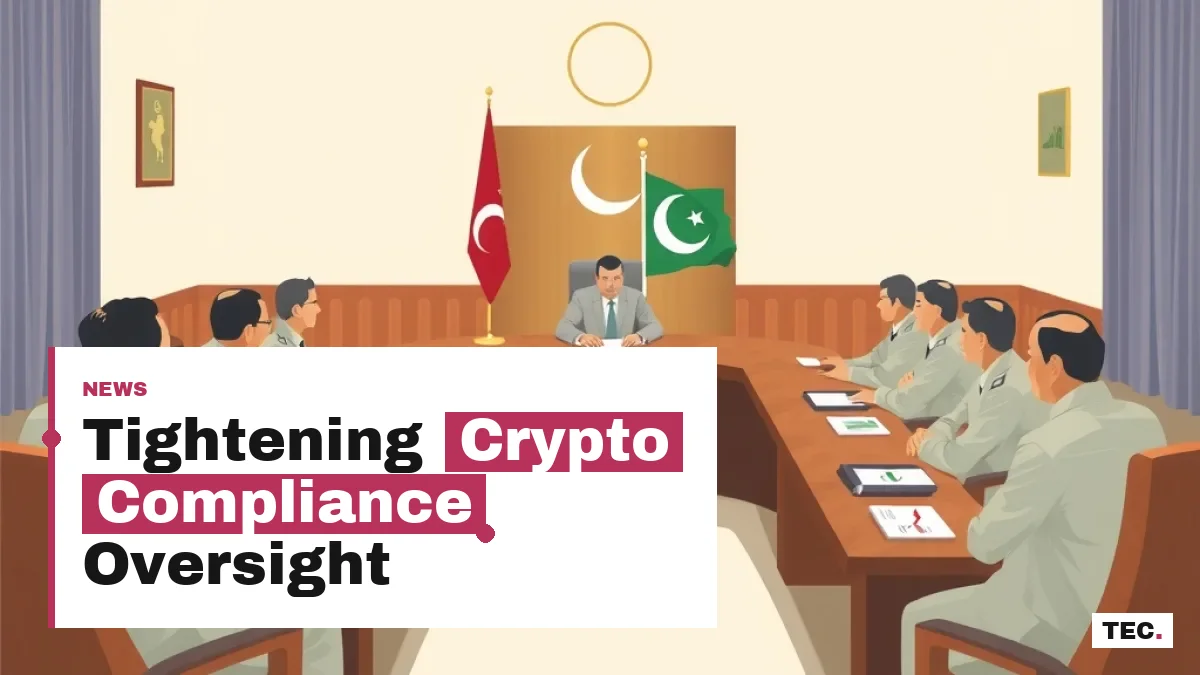
Pakistan has formally integrated its virtual asset regulator PVARA into the country's primary anti-money laundering legislation. The decision was taken during a high-level government meeting focused on tightening financial compliance rules across emerging digital channels and institutional oversight bodies.
Federal Finance Minister Senator Muhammad Aurangzeb chaired the 19th meeting of the National Executive Committee (NEC) on Anti-Money Laundering and Countering the Financing of Terrorism (AML-CFT) at the Finance Division. The committee approved three primary amendments to strengthen the legal network, placing supervisor oversight directly alongside financial intelligence systems.
PVARA Placed Under Schedule IV of the Anti-Money Laundering Act
The National Executive Committee approved adding the Pakistan Virtual Assets Regulatory Authority (PVARA) to Schedule IV of the Anti-Money Laundering Act (AMLA). PVARA is the official regulatory entity assigned to oversee digital assets and cryptocurrency operations within Pakistan. Placing the supervisor itself inside the scope of the legislation connects the regulatory body closely with national financial monitoring protocols.
This institutional shift follows growing public attention around digital assets and parliamentarians raising concerns regarding crypto-linked fraud in separate legislative sessions. Previous steps regarding the oversight of virtual asset providers laid the groundwork for defining regulatory boundaries, but listing PVARA in Schedule IV specifically binds the oversight authority to the statutory AML network.
The official briefing released after the meeting did not outline the exact compliance requirements or administrative duties that follow from this listing. Establishing these specifics remains an immediate task for the Finance Division, PVARA, and the Financial Monitoring Unit (FMU).
Revisions to Cash Currency Transaction Report Thresholds
Alongside the regulatory changes for digital assets, the committee sanctioned a revision to the operational limits for Currency Transaction Reports (CTRs). Banks, payment providers, and designated reporting entities file CTRs with the Financial Monitoring Unit whenever a cash deposit, withdrawal, or transfer exceeds a designated monetary limit.
Under the Anti-Money Laundering Act, the NEC holds the legal mandate to define this baseline figure through an official gazette notification. Historic FMU guidance and a published 2021 report established the previous reporting threshold at Rs. 2 million. However, the committee's official statement omitted the newly approved figure and did not clarify whether the cash reporting boundary has been raised or lowered.
The specific direction of this threshold change alters the workflow for financial institutions across Pakistan:
- A lowered CTR threshold: Increases the total volume of mandatory transaction filings submitted to the FMU, capturing smaller cash movements but generating a heavier processing load for reporting entities.
- A raised CTR threshold: Reduces filing frequency for commercial banks and digital payment operators, easing operational burdens while leaving higher volumes of cash activity unmonitored.
- Pending gazette notification: The precise operational impact on commercial banks and fintech platforms remains unconfirmed until the Finance Division publishes the formal figure.
Maritime Law Additions and Financial Monitoring Unit AI Integration
The committee also approved extending AMLA coverage to maritime jurisdictions by placing Section 28 of the Pakistan Maritime Zones Act, 2023 into Schedule I of the Anti-Money Laundering Act. The official announcement identified this modification as an expansion of statutory authority, though the official text omitted details regarding the specific offenses covered under Section 28.
Beyond statutory schedules, the meeting included a performance review of the Financial Monitoring Unit. Officials evaluated the FMU's processing capacity, technical capabilities, and active deployments of artificial intelligence and machine learning tools. Finance Minister Senator Muhammad Aurangzeb directed the FMU leadership to establish a structured implementation roadmap featuring explicit timelines to upgrade its analytical output and inter-agency coordination.
The operational review comes amid broader statutory scrutiny of financial platforms, where automated tools help identify suspicious activity alongside ongoing money laundering investigations in fintech. As digital transaction volumes expand, integrating machine learning tools within the FMU is intended to improve real-time detection of high-risk financial flows. However, these technical upgrades remain closely tied to discussions regarding broader regulation around artificial intelligence across government departments.
Institutional Leadership and Implementation Timelines
The 19th NEC meeting brought together senior leadership from Pakistan's legal, financial, and regulatory bodies. Officials in attendance included:
- Federal Minister for Law and Justice
- Governor of the State Bank of Pakistan (SBP)
- Federal Finance Secretary
- Chairman of the Securities and Exchange Commission of Pakistan (SECP)
- Director General of the AML-CFT Authority
- Senior representatives and officials from the Financial Monitoring Unit and partner ministries
The Finance Minister emphasized that the AML-CFT framework must continuously adjust to address changing financial risks and new technical mechanisms. Further public verification of these measures will depend on the publication of the implementation roadmap, operational timelines, and the revised CTR cash threshold figure in the official government gazette.
Questions Regarding PVARA AML Integration
What is PVARA's main role in Pakistan?
PVARA is the designated regulatory authority responsible for monitoring, structuring, and supervising virtual assets, cryptocurrencies, and digital asset service providers operating within Pakistan.
What was the previous CTR threshold for cash transactions?
According to previous Financial Monitoring Unit guidance and reports from 2021, the threshold for mandatory Currency Transaction Reports was set at Rs. 2 million.
Which regulatory agencies participated in the NEC meeting?
The meeting was led by the Finance Minister and attended by leadership from the Ministry of Law and Justice, State Bank of Pakistan, SECP, Finance Division, AML-CFT Authority, and the FMU.
Source: PhoneWorld