Introduction
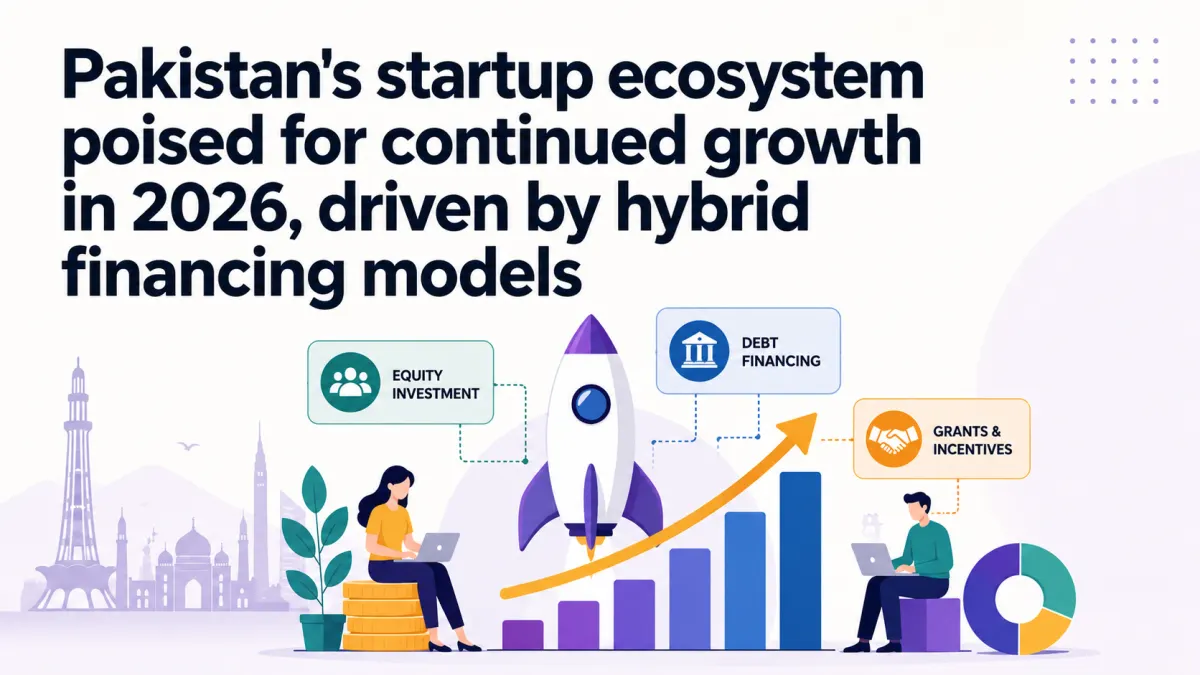
Pakistan's vibrant startup landscape is demonstrating remarkable resilience and adaptability, with projections indicating sustained growth and enhanced access to financing through 2026. A pivotal shift in fundraising strategy towards hybrid financing models – a combination of equity and debt – has been instrumental in this recovery, nearly doubling capital raised in 2025 compared to the previous year.
What Happened
According to invest2innovate (i2i), a key player in Pakistan's startup ecosystem development, Pakistani startups secured approximately $74.2 million in reported funding in 2025. This figure represents a substantial increase from the $33.5 million raised in 2024. The significant growth is primarily attributed to a strategic pivot from traditional equity-only funding to hybrid equity-debt deals, which accounted for a staggering $66 million across 16 transactions in 2025. Pure equity funding, in contrast, only amounted to about $8.2 million.
This new approach successfully channeled much-needed capital to startups across diverse sectors, including logistics, healthtech, transportation, entertainment, and wedding tech, with undisclosed deals in sports tech and SaaS/cloud computing also contributing to the momentum. Notable raises include Haball's $52 million hybrid round, alongside funding for MedIQ, Qist Bazaar, and BusCaro.
While current funding levels remain below the peak of $350+ million seen in 2021-2022, the 2025 figures signal a meaningful recovery and a clear shift towards more diversified financing structures. Interestingly, female-founded startups secured 31% of deals in 2025, a significant increase from 13% in 2024, despite their share of overall capital slipping slightly to 14% from 16%, indicating smaller average deal sizes.
Why It Matters
The successful adoption of hybrid financing models is a game-changer for the Pakistani startup ecosystem. In a period of global economic uncertainty and tightening capital markets, reliance solely on equity funding proved challenging. The move towards incorporating debt allows startups to access capital without diluting equity prematurely, providing greater flexibility and potentially extending their runway. This diversified approach makes the ecosystem more robust and less susceptible to the cyclical nature of venture capital markets.
Furthermore, the increased participation of female-founded startups in deal-making, even with smaller average ticket sizes, highlights progress in inclusivity and widens the talent pool for innovation. This trend is crucial for fostering a truly representative and dynamic startup ecosystem.
Industry/Business Impact
The shift to hybrid financing is reshaping the investment landscape for Pakistani startups. It opens doors for greater involvement from bilateral/multilateral creditors and development finance institutions (DFIs), which are increasingly interested in supporting the ecosystem's development. These institutions can play a crucial role in providing guarantees and mitigating initial risks, making startups more attractive to traditional banks that still require collateral.
Venture debt, while still nascent in Pakistan and primarily dollar-denominated through regional players, presents another avenue for growth. Addressing the foreign currency repayment challenge for local startups will be critical for its wider adoption. The overall impact is a more disciplined capital deployment environment, where startups are encouraged to focus on revenue-backed growth and capital efficiency, leading to a healthier and more sustainable business landscape.
Future Outlook
Looking ahead to 2026 and beyond, i2i CEO Sarah Munir anticipates that funding will remain selective and efficiency-driven. As macroeconomic conditions improve and investor confidence gradually returns, there will be a continued emphasis on hybrid financing structures, revenue-backed growth models, and capital-efficient startups. This disciplined approach is expected to cultivate a more sustainable investment environment.
The interest from DFIs and the gradual opening of traditional banks to startups (albeit with collateral requirements) signify a broader acceptance and integration of startups into the mainstream financial system. This trend, coupled with the proven success of hybrid models, bodes well for the continued growth and maturity of Pakistan's startup ecosystem.
TecSpectrum Analysis
Pakistan's startup scene is demonstrating remarkable strategic evolution. The move to hybrid financing isn't just a temporary fix; it's a fundamental recalibration that reflects global investment trends and local market realities. It signals a maturation of the ecosystem, where founders are becoming more savvy about capital structures and investors are seeking diversified risk profiles. The emphasis on capital efficiency and revenue growth is a healthy sign, moving away from a 'growth at all costs' mentality. While the volume hasn't returned to peak levels, the quality and sustainability of funding appear to be improving, which is ultimately more beneficial for long-term ecosystem health. The challenge will be to further localize venture debt solutions and continue fostering an environment where diverse founders can secure equitable access to capital for scale.
Key Takeaways
- Pakistani startups raised $74.2 million in 2025, nearly double 2024's figures.
- Hybrid equity-debt financing was the primary driver, accounting for $66 million of total funding.
- This shift indicates a more sustainable and diversified funding approach.
- Logistics, healthtech, and transportation were among the key sectors receiving financing.
- Female-founded startups secured 31% of deals in 2025, up from 13% in 2024.
- Future funding is expected to remain selective, focusing on capital efficiency and revenue-backed growth.
FAQ
What is hybrid financing for startups?
Hybrid financing for startups involves combining different types of capital, typically a mix of equity (selling ownership stakes) and debt (borrowing money to be repaid with interest), rather than relying solely on one or the other.
Why did Pakistani startups shift to hybrid financing?
Startups shifted to hybrid financing to adapt to changing macroeconomic conditions, overcome challenges in securing pure equity funding, and access capital without excessive equity dilution, thereby providing more flexibility and stability.
Which sectors benefited most from the new financing model?
Sectors such as logistics, healthtech, transportation, entertainment, and wedding tech, along with sports tech and SaaS/cloud computing, were among those that significantly benefited from the new hybrid financing approach in Pakistan.
What is the outlook for venture debt in Pakistan?
Venture debt is an emerging opportunity, currently accessed through regional dollar-denominated investors. Its wider adoption in Pakistan will depend on addressing challenges related to foreign currency repayment for local startups.
How has funding for female-founded startups changed?
Funding for female-founded startups saw an increase in deal participation, rising from 13% in 2024 to 31% in 2025. While their share of capital slightly decreased, the higher deal volume indicates improved access, albeit with smaller average deal sizes.