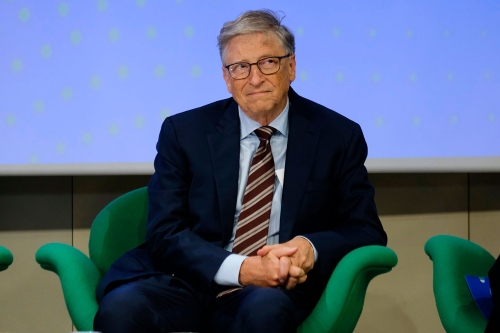
As artificial intelligence reshapes industries, Bill Gates has made a bold prediction: AI will soon replace humans in almost every field, except a few where human empathy, creativity, and strategic thinking are irreplaceable.
At the heart of Gates’ remarks is a powerful message: while machines may dominate efficiency, some professions still demand what only humans can provide.
The AI Revolution: Who's at Risk?
According to Gates, teachers and doctors are among the most exposed to AI-driven transformation. With advancements in large language models and diagnostic algorithms, AI can now offer:
- Personalized learning based on student behavior
- Medical diagnoses from vast datasets
- 24/7 healthcare and education access, especially in underserved regions
But can a machine truly replicate empathy, moral judgment, and emotional intelligence?
“Can an algorithm comfort a child or deliver bad news to a patient with compassion?” Gates asked rhetorically.
Jobs AI Won’t Replace (For Now)
Despite AI's growing capabilities, some professions still resist automation, and Gates highlights a few:
1. Energy Experts
Climate challenges demand nuanced, often localized solutions. Designing sustainable energy systems requires a mix of science, regulation, creativity, and systems thinking—still beyond AI’s grasp.
2. Biologists
Working with unpredictable, living systems, biologists engage in complex field research and hypothesis-driven exploration that can’t be automated.
3. Developers
Ironically, those who create AI remain essential. Building and maintaining AI systems, debugging, and innovating require ongoing human problem-solving and ethical oversight.
“Developers are not just coders; they’re architects of our digital future,” Gates noted.
“Free Intelligence” – A Double-Edged Sword
Gates introduces the idea of “free intelligence”—the possibility of making AI-powered skills widely accessible, particularly in regions facing talent shortages. This could democratize opportunities and reduce global disparities in education, healthcare, and tech access.
However, there's a flipside. As automation accelerates, many jobs may disappear faster than people can reskill, increasing economic pressure and social inequality.
Why Human Intuition Still Matters
Despite AI’s power, some things remain deeply human:
- Empathy
- Strategic decision-making
- Ethical judgment
- Emotional nuance
- Creativity
Gates warns that AI should augment, not replace these human traits.
“We need to guide AI’s evolution with ethics, empathy, and a deep understanding of its impact on society,” he emphasized.
The Bottom Line
Bill Gates isn’t saying AI will destroy all jobs—he’s calling for a thoughtful, human-first approach to its deployment.
In a world where algorithms write code and diagnose diseases, it’s our empathy, creativity, and ethics that will define what remains truly human.